
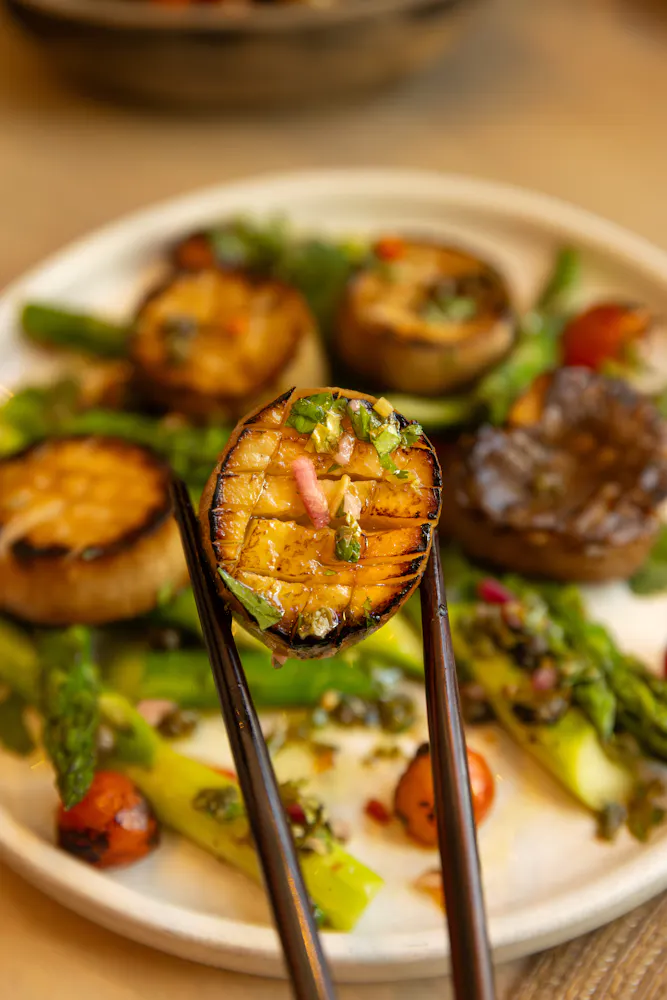
Mushrooms in plant-based cooking have range. One minute they’re soaking up a punchy marinade, the next they’re hitting a hot pan and coming out bronzed, crisp-edged, concentrated in flavor, and very ready for attention.
Honestly, fungi are doing a lot for something that grows in the dark.
The fun part is that the mushroom itself is only half the story.
Heat changes it. Salt changes it. Marinades get into all those nooks and crannies. Even the decision to slice, tear, roast, grill, or fry can send the same mushroom in a totally different direction.
So yes, we’re going deep on fungi. Browning, umami, texture, marinades, and the delicious little decisions that make mushrooms worth obsessing over.
Consider this your permission slip to let mushrooms show off.
The Brown Stuff Is The Good Stuff
Pale mushrooms can be perfectly edible. Deeply browned mushrooms are the ones people start stealing straight from the pan.
Mushrooms carry a lot of water. As they cook, that moisture has to leave before serious browning can get going. Once the surface dries out and heat can do its thing, browning reactions create roasted aromas and deeper flavor. Research on mushroom-derived ingredients has linked heat-driven Maillard reactions with more complex roasted and savory notes.
The useful takeaway is delightfully simple: moisture control comes first.
A few kitchen moves help:
And yes, crowded-pan panic is a little overdramatic. Mushrooms can still brown in a busy pan if you give their released water time to evaporate. A steam-then-sear approach can work beautifully too.
Tiny mission: next time you cook mushrooms, chase color before you chase sauce.
Umami Is Mushrooms’ Built-In Cheat Code
Mushroom umami comes from naturally occurring taste compounds including glutamate and nucleotides such as guanylate. Different species and processing methods can change how much of those compounds are present, which is one reason fresh shiitakes and dried shiitakes can land differently on your tongue.
That savory depth is useful because it gives a dish a fuller bass note. Think less “mushroom flavor everywhere” and more “why is this bite so ridiculously satisfying?”
We like to layer umami with other ingredients rather than ask one mushroom to do all the emotional labor. Miso, soy, fermented chile, tomato, seaweed, toasted aromatics, and mushroom-rich sauces can all push in different directions.
The strongest plant-based cooking usually works this way. Flavor gets built in layers.
Curious what that looks like on a plate? Browse our location menus and follow the fungi.
Texture: Choose Your Own Fungi Adventure
Calling mushrooms a meat substitute sells them short. Their best trick is range.
Mushroom texture can move from delicate to chewy, juicy to crisp, depending on the variety, cut, moisture level, and cooking method. That opens up more possibilities than a one-for-one swap ever could.
Here’s the cheat sheet:
Same kingdom. Very different résumés.
That flexibility is handy for plant-based catering too. Mushrooms can go crisp in a handheld bite, stay juicy on a skewer, add chew to a rice bowl, or bring depth to a noodle tray. Vegetarian-friendly groups get plenty to pass around, and vegan catering gets more texture to play with.
Marinades Need A Little Strategy
A mushroom marinade can be fantastic. Timing decides whether you get glossy and charred or soft and steamy.
Mushrooms are already moisture-rich, so loading them with a wet marinade and then using timid heat can make browning slower. For hard sears, we often think in stages: get color first, then bring in the salty, sweet, spicy, or tangy stuff.
For grilling, marinades can work beautifully when they cling to the surface and get time over direct heat. Thick pastes also settle into the ridges and folds of mushrooms such as maitake or oyster.
Try building a mushroom marinade around four jobs:
Then decide what finish you want. Crisp? Keep the coating lighter and watch the moisture. Lacquered? Reduce the marinade into a glaze. Juicy? Let the mushroom keep some of its water and lean into that tenderness.
There is no single correct mushroom personality. Thank goodness. Dinner would be boring.
One Mushroom, Four Different Jobs
This is where mushrooms in plant-based cooking get really fun. A chef can use the same ingredient family several ways across a menu without repeating the same eating experience.
Current menus show the spectrum clearly: shiitakes can become a seared “steak,” mushrooms can be fried until crisp, mushroom flavor can melt into a truffle cream, and mushroom bacon can bring crisp contrast to a burger or carbonara.
The ingredient stays recognizable. Technique changes the assignment.
That gives us four useful roles to think about:
A plate gets more interesting when one ingredient can change jobs halfway through dinner.
Ready for a little field research? Find your local menu and see how many mushroom cameos you can spot.
The Burger Lesson: Moisture Is A Control Freak
Our PLANTA Burger is a good example of why mushroom technique rarely begins and ends at “add mushrooms.”
The house-made patty starts with grains, lentils, black beans, and mushrooms. The grains and legumes are cooked and rested overnight. Mushrooms are roasted separately to concentrate their flavor.
Then the mixture is combined. Patties are formed by hand and rested again before cooking.
That resting and roasting work has a purpose: structure.
Too much loose moisture can push a plant-based patty toward soft or gummy territory. Roasting the mushrooms separately gives us better control over flavor and water before everything meets in the mix.
Then mushrooms show up again as mushroom bacon.
Same burger, two jobs. Roasted mushroom depth lives inside the patty, while crisp, smoky mushroom bacon sits higher in the build alongside cheese, pickles, lettuce, tomato, onion, toasted vegan brioche, and secret sauce.
This is the piece generic “mushrooms are meaty” advice tends to miss. Great texture is designed.
Give The Fungi A Little More Screen Time
Mushrooms in plant-based cooking can be crispy snack, savory backbone, juicy centerpiece, or smoky garnish. The trick is deciding what you want from them before the pan gets involved.
Once you start cooking for texture first, fungi get a lot more interesting.
Browse what’s cooking near you, pick the mushroom move that sounds good, bring someone hungry, and come ready to share.
FAQs
Why do mushrooms taste so savory?
Mushrooms contain naturally occurring umami compounds, including glutamate and flavor-enhancing nucleotides. The amounts vary by species and processing, and drying can increase certain umami compounds in shiitakes.
What is the best mushroom for plant-based cooking?
There is no single winner. Oyster mushrooms are great when you want crisp, frilly edges. Shiitakes bring chew and concentrated savoriness. Cremini are versatile. King oyster and portobello work well when you want larger, more substantial pieces.
How do you get mushrooms crispy?
Drive off surface moisture, use enough heat, give the mushrooms solid contact with the pan or roasting surface, and leave them alone long enough to color. Once excess water evaporates, browning and crisping become much easier.
Should you marinate mushrooms before cooking?
You can, especially for grilling or roasting. For a hard sear, a very wet marinade can slow browning, so another option is to brown first and glaze or season more heavily afterward.
Can mushrooms replace meat in a plant-based dish?
They can fill some of the same culinary roles because they offer savoriness, chew, moisture, and browning potential. They also shine in roles that have little to do with imitation, including crisp toppings, creamy sauces, broths, fillings, and condiments.
Do dried mushrooms have more umami?
Dried mushrooms can be especially intense. Research on shiitakes shows that drying can increase 5′-guanylate, an umami compound associated with their savory taste. Rehydrating liquid can also carry plenty of flavor, depending on the recipe.